Battery storage
Global battery storage
Follows the battery-storage build-out through China, the United States, Europe, Australia and the Gulf, with market figures set beside project examples and cost evidence. The IEA baseline is 108 GW added worldwide in 2025, 40% above 2024; the report keeps GW and GWh apart as power and energy, and capital cost in USD/kWh apart from the cost of shifting electricity across the day. Its Saudi section carries 18 GWh energised by the end of June 2026 as a component of, not a replacement for, the wider mixed-stage ledger. The global annual figures describe 2025 and each country and project page keeps its own observation date; figures are as compiled on 19 September 2026.
- Compiled 19 September 2026
- 14 pages
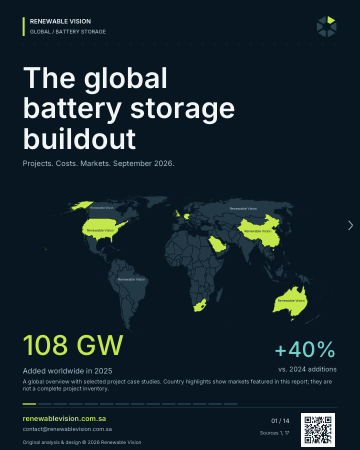
What the report covers
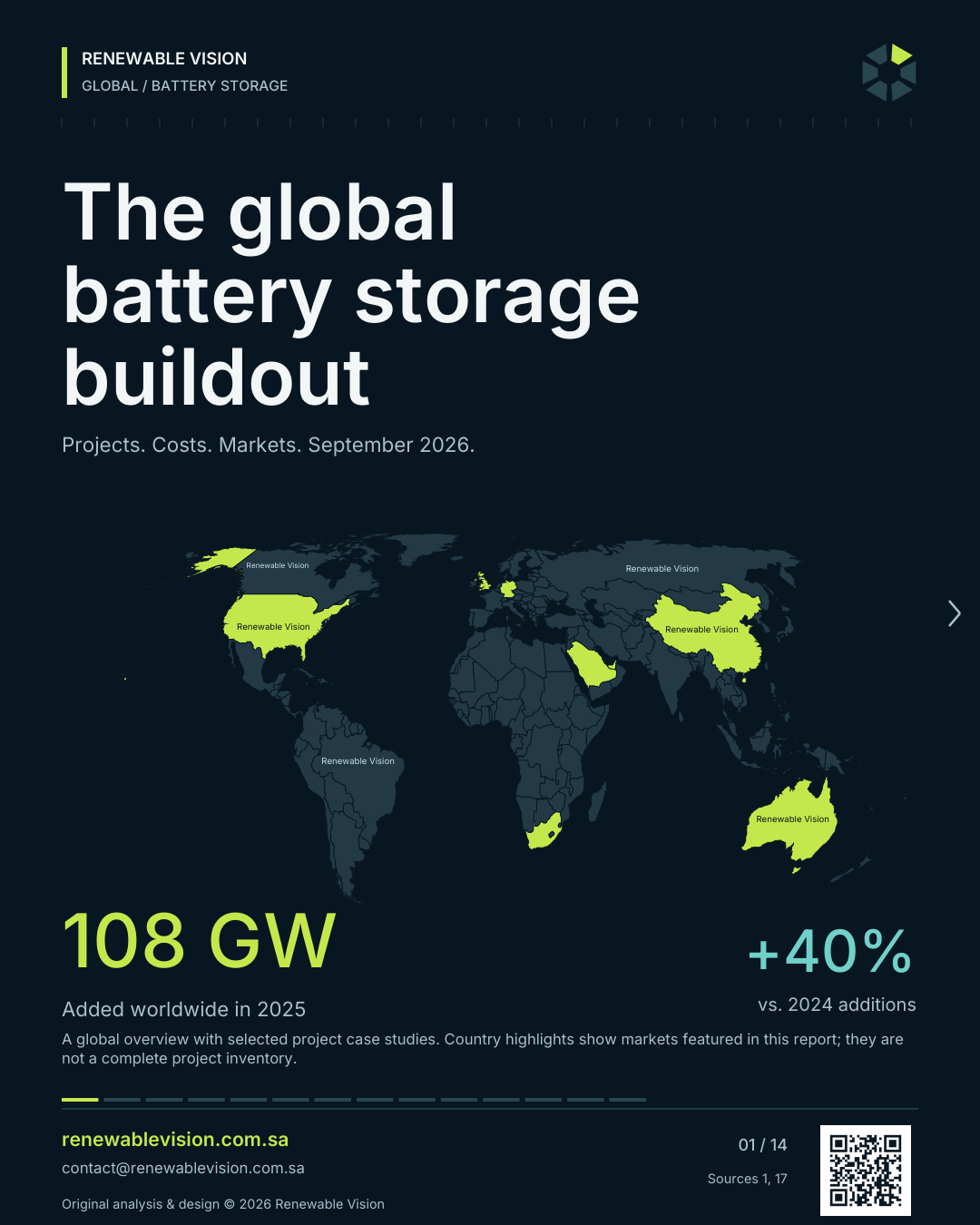
The world added 108 GW of battery storage in 2025, according to the IEA—40% more than in 2024.
The growth is clear. Understanding what the numbers represent matters just as much.
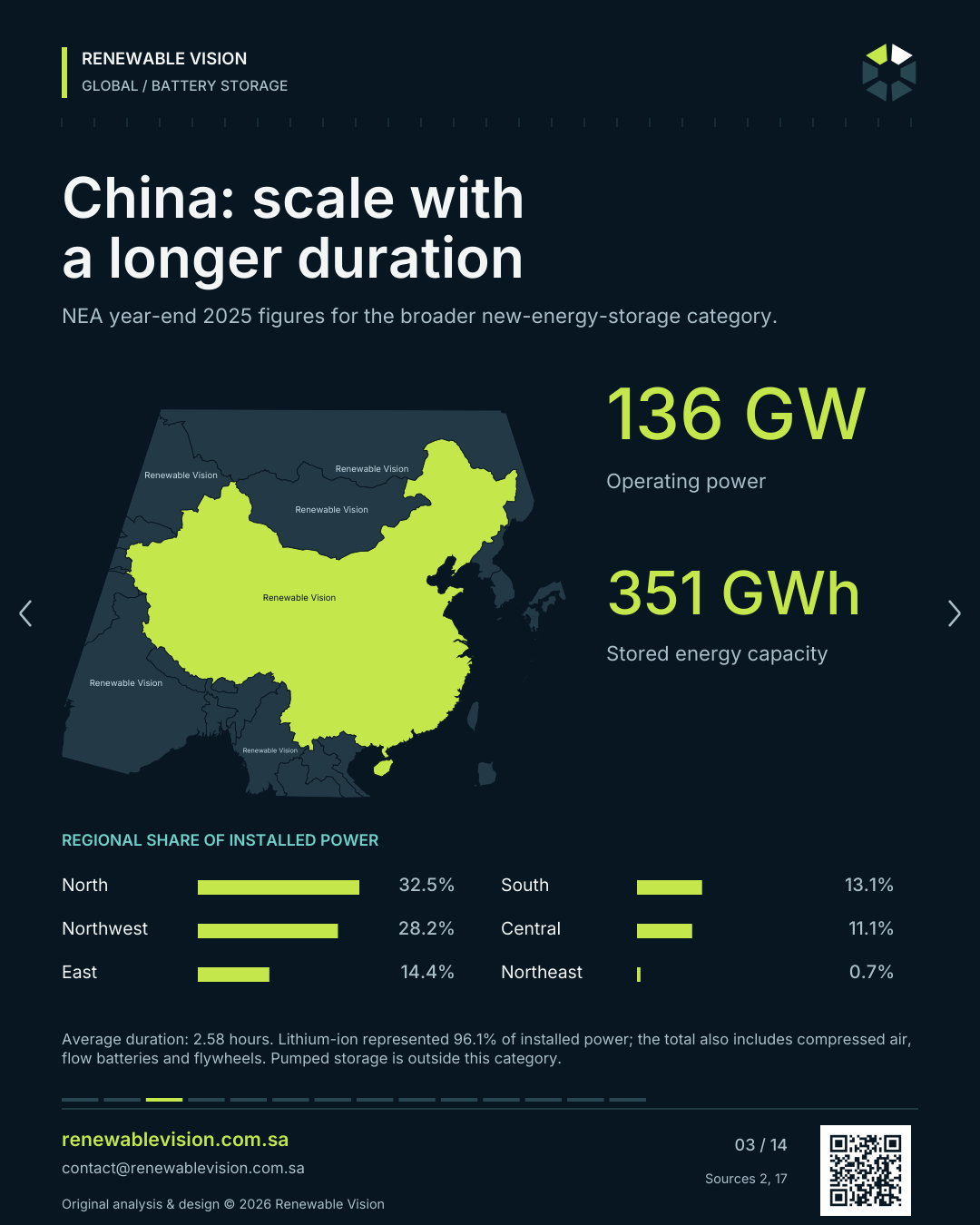
Our new Renewable Vision report follows the battery-storage buildout through China, the United States, Europe, Australia and the Gulf, connecting market figures with project examples and cost evidence.
In Saudi Arabia, Saudi Energy reported 18 GWh energized by the end of June 2026. SPPC's signed and tendered projects represent additional development stages, not operating capacity. The Red Sea's 1,227 MWh off-grid system shows another role for storage alongside renewable generation and integrated utilities.
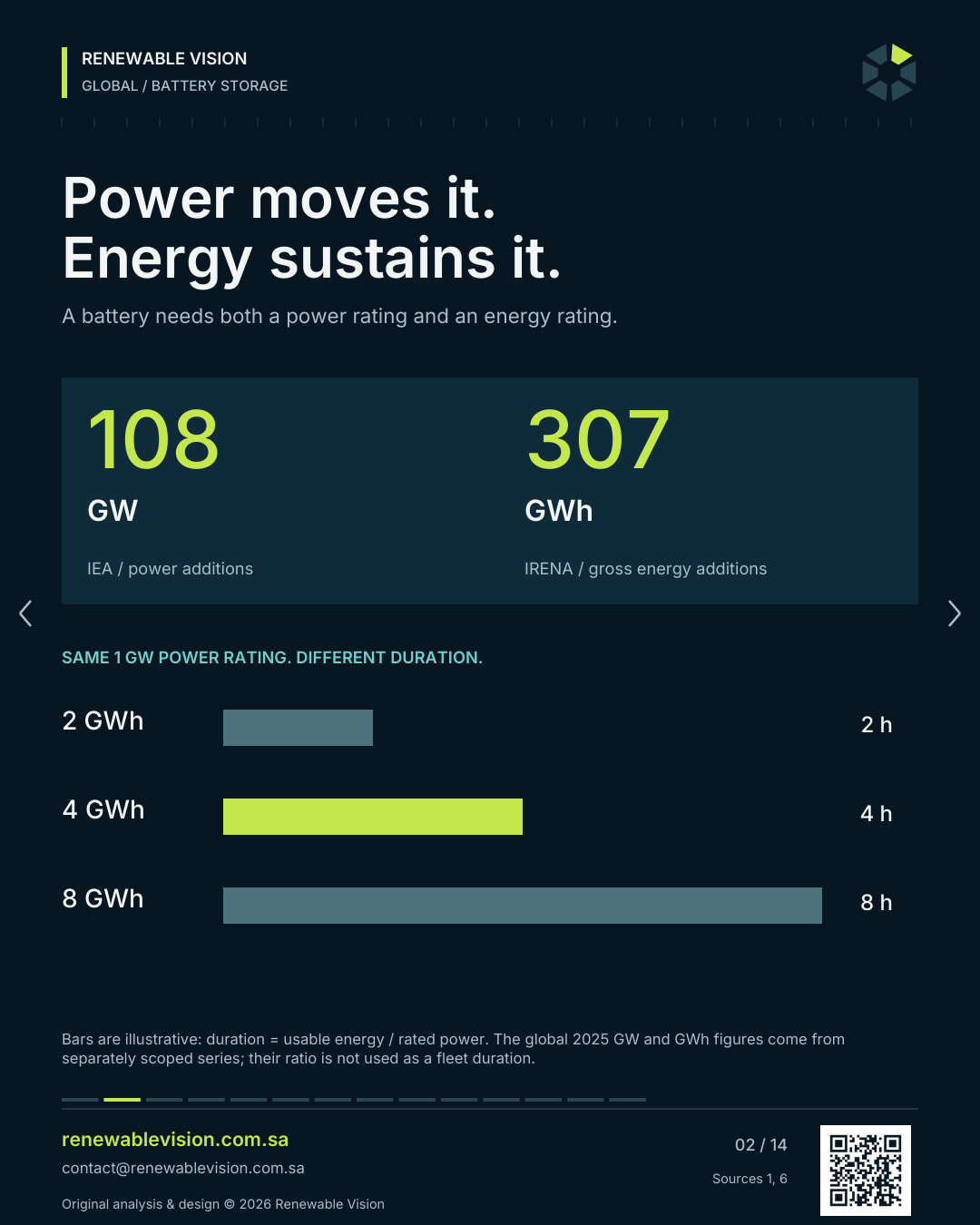
The report also explains why GW and GWh tell different stories, why capital cost is different from the cost of shifting electricity, and how battery chemistry connects power systems with electric mobility.
Each chart includes its scope and sources.
Preview
3 of 14 pages shown
Get the report
Global battery storage
The PDF and the data files are free for members. Membership takes a minute: verify an email address or a mobile number once, and the download opens along with the dashboards and CSV export.
Figures are as filed on 19 September 2026; live dashboards may differ.